The Symbolism Of Bad Bunny's Super Bowl 2026 Performance
- Mar 1
- 4 min read
February 8th, 2026, marked the 60th year of the Super Bowl. The annual halftime performance became the most watched in NFL history. Bad Bunny (Benito Antonio Martinez Ocasio) generated 4 billion views within 24 hours of his performance, became the first solo Latino artist to headline the Super Bowl, and generated the first Super Bowl performed almost entirely in Spanish. Aside from these milestones, Bad Bunny put on an unforgettable performance that symbolized various aspects of his Puerto Rican culture, along with celebrating the harmony amongst all of the Americas. Watch the performance here: https://www.youtube.com/watch?v=G6FuWd4wNd8
In the meantime, let's adventure through Bad Bunny's acts of symbolism:
THE JERSEY

Bad Bunny broke out onto the Super Bowl field wearing a white jersey with his mother's surname, "Ocasio" across the back. He opposed the patriarchal industry by choosing to honor his maternal lineage. Number "64" represents his uncle's birth year—not a player's number, but a badge of honor regarding his family tree. Bad Bunny shared with Harpers Bazaar, “1964 is the year my Tio Cutito was born. He is my mother’s brother. Everything that I know about the NFL is thanks to him."
THE CASITA (THE PINK HOUSE)
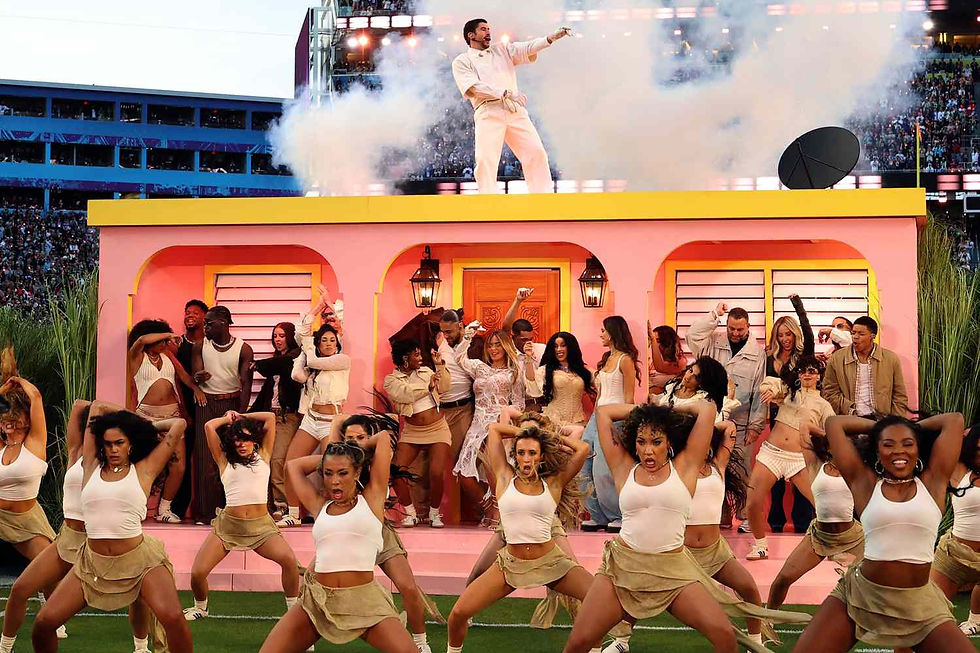
The Super Bowl set recreated a carport party by placing white plastic chairs on a multi-million dollar stage. Bad Bunny used this as an act of radical validity by elevating the everyday aesthetics of the Puerto Rican working class to global status. Pedro Pascal, Cardi B, and other public figures sat amongst the plastic white chairs to reinforce the communal “everyone is welcome” vibe. If you're Hispanic, then you're wildly familiar with carport parties.
THE ROOTS (SUGAR CANE AND JÍBAROS)
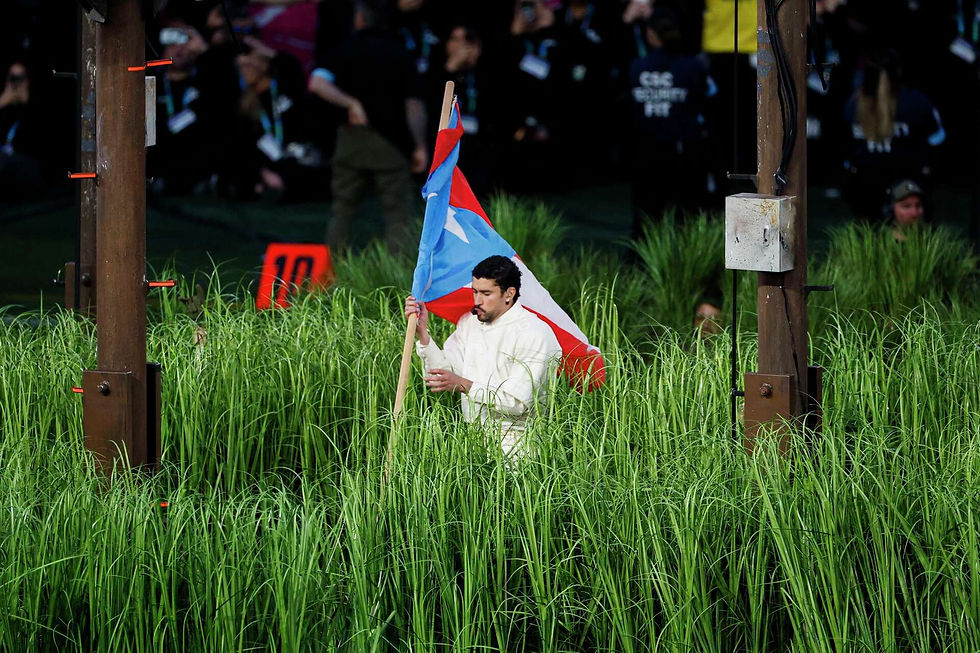
Bad Bunny began his performance in the midst of a sugar cane field; a direct reference to Puerto Rico's agricultural history. The dancers on the field donned pavas, the straw hats worn by Jíbaros, which are rural subsistence farmers. The Jíbaros is the ultimate symbol of Puerto Rican self sufficiency, resistance, and connection to the land—a figure that exists outside the Americanized metropolitan identity.
EL APAGÓN: THE BLACKOUT

During the song “El Apagón” (the blackout) the stage’s electric poles sparked and blew out. This was not standard pyrotechnics, it was a critique of the island’s fragile power grid—the privatization controversies and the chronic power outages that plague the population of Puerto Rico. Bad Bunny symbolized this cultural issue through a visual metaphor of the unreliable power grid and citizen frustration.
THE STRUGGLE (GENTRIFICATION)

Ricky Martin joined Bad Bunny to perform Lo Que Le Pasó a Hawaii (what happened to Hawaii). The song draws a sharp parallel between the annexation and tourism takeover of Hawaii and the current displacement of Puerto Ricans due to tax acts enforcing foreign investors. A rallying cry for cultural autonomy in an era of neo-colonialism—performed by two generations of the island’s biggest stars—was more than just a moment of grave entertainment.
COLOR THEORY (THE SHADE OF RESISTANCE)

The symbol that went the most unnoticed throughout this performance was the fact that Bad Bunny explicitly carried the light blue flag of Puerto Rico. It was a subtle but definitive nod to sovereignty and resistance against colonial rule. The navy blue version of the flag represents the 1952 colonial standard that matches the U.S. flag. The light blue version of the flag represents the 1895 original independence design. Bad Bunny swayed this light blue version of the flag to oppose the U.S. agenda of colonialism.
THE DIASPORA (NUEVAYOL)

The Puerto Rican inspired set transitioned to a Brooklyn-Washington heights block party, bridging the ocean between the island and the millions of Nuyoricans stateside. Bad Bunny shared a shot with Toñita, real life owner of the Caribbean Social Club in Brooklyn, validating the migrant experience as an essential part of the Puerto Rican identity.
THE CROSSOVER (ASSIMILATION REVERSED)

In a reversal of the typical “Latin Crossover” trope, Lady Gaga entered Bad Bunny’s world. She sang in a Latin arrangement of Die With A Smile, accompanied by the salsa band Los Sobrinos. The segment was staged as a traditional wedding with Bad Bunny signing the marriage certificate as a witness—a theatrical nod to union and tradition.
THE PHILOSOPHY (SAUDADE)

Beyond politics, the performance was driven by Saudade (nostalgia/deep yearning). Drawing from the album “Debí Triar Más Fotos” the narrative arc emphasized missing home, the fleeting nature of time, and the regret of not capturing enough memories with loved ones.
GEOGRAPHY (REDEFINING AMERICA)

In his closing remarks, Bad Bunny listed countries from Chile to Canada, concluding with “Together we are America”. This message challenged the U.S. monopoly on demonym “American." It reasserted that America is a continent, and not just a country.
The force of love from Bad Bunny's performance stirred the media's pot with cultural appreciation and anti-American conspiracies. Despite the complaints and threats from right-wing Americans, Bad Bunny's performance is an evident celebration and promotion of love and harmony amongst all American countries, along with cultural context and appreciation for his homeland, Puerto Rico. For Hispanics who tuned in to this year's Super Bowl, it was hard not to shed a few tears over this beautiful performance.
SOURCES:
https://www.harpersbazaar.com/celebrity/latest/a70280357/bad-bunny-2026-super-bowl-lx-outfit-photos/


Comments